Thursday, June 28, 2007

Bald eagle soars off endangered list


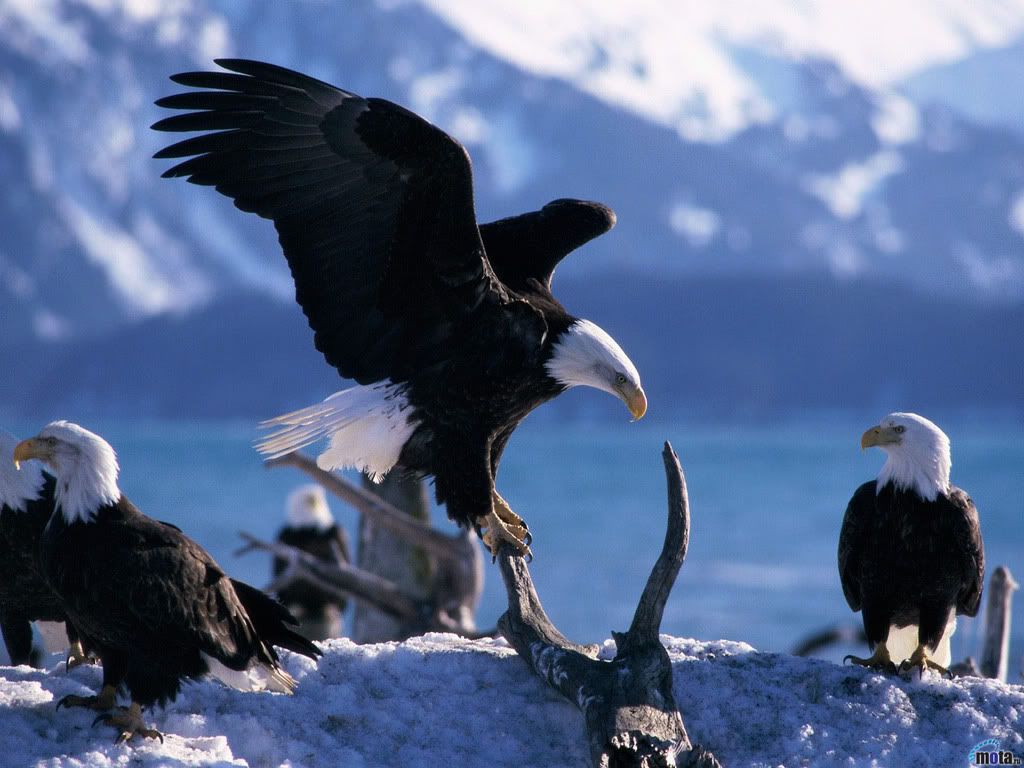
After being on the verge of extinction in 1967, the American bald eagle has officially been taken off the endangered species list today.

“Today, I am proud to announce the eagle has returned,” Interior Secretary Kirk Kempthorne said while making the announcement at Jefferson Memorial.

According to the AP article “Bald Eagle comes off endangered list,” in 1963, there were only about 417 mating pairs of bald eagles in the contiguous 49 states.

The powerful and majestic-looking creature had been decimated by DDT, a pesticide that was used to control mosquitoes and other insects. DDT residue contaminated rivers and other waterways, contaminating the fish that bald eagles would later ingest which would then poison and inevitably cause their death.

It was also “hunted for its feathers, shot from airplanes, the subject of a 50-cent bounty in Alaska… and fed to hogs in some states,” according to another AP article-“U.S. bald eagle numbers make recovery.” Loss of habitat also contributed to the bald eagle’s near demise.
Congress passed the Bald Eagle Protection Act in 1940 to prohibit the killing, selling or possessing of the regal bird. It was also listed as endangered under the Endangered Species Act in 1967. But what the experts identify as the first and most important step in the eagle's path to recovery began when in 1972, the use of DDT was banned in the United States.

According to the US Fish and Wildlife Service (USFWS), there is now an estimated high of 9,879 breeding pairs, 1,133 of which are found in Florida.
  • To learn basic facts about the bald eagle (and even listen to some of the eagle's actual cries!), visit the American Eagle Foundation page.
  • To listen to an interview clip of National Bald Eagle Coordinator Jody Millar's discussion of "How bald eagles became endangered," click here.

Thursday, June 14, 2007

Instant messaging your way to a better planet


Everyone IM's nowadays, so why not contribute to helping the planet while you're at it?

Thanks to i'm, a new initiative from Windows Live Messenger, you actually can.

The way the program works is this: every time you use Windows instant messaging service, Microsoft will share a portion of the service's ad revenue to the cause of your choice. Among your options, the initiative to "help explore and protect the planet" by choosing the Sierra Club. You can also help increase awareness and join the fight against global warming by choosing StopGlobalWarming.org.

Of course, the environment is not the only one that needs our help, so you can also choose among other organizations dedicated to causes of great importance, among them the American Red Cross and UNICEF. And the great thing is, you don't have to feel like once you've chosen a cause you can't help out another that might interest you. Actually, if you like, you can switch back and forth between the causes dearest to your heart by making the appropriate selection whenever you begin a new conversation (I tried it out myself so I know it works!).

This is what you need to do:
  1. Download the Windows Live Messenger instant messenger service.
  2. Before initiating a conversation, choose the cause of your choice next to your Display Name.

  3. Start your conversation. While you chat with your friends or family members, you'll be contributing to the issue that is of most importance to you. Every conversation counts!
For more details, visit the i'm page and start making a difference!

Wednesday, June 13, 2007

Online petition asks for Florida panther protection


Members of Defenders of Wildlife, an organization dedicated to the protection of all native wild animals and plants in their natural communities, have set up an online petition with the purpose of saving the home of some of the world's last remaining Florida panthers.

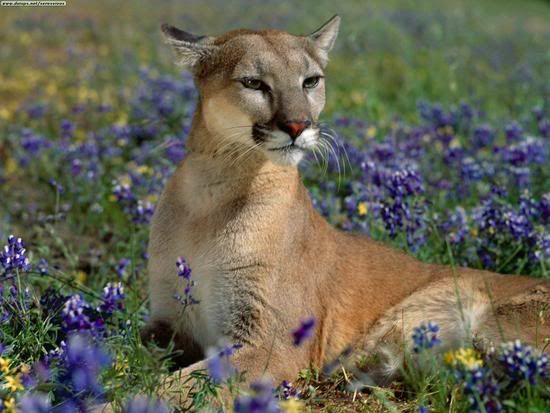
According to the US Fish and Wildlife Service, there are less than 100 Florida panthers left in the wild, many of which live at the Big Cypress Natural Preserve in the city of Ochopee in Southwest Florida.

However, the National Park Service is considering opening up a part of Big Cypress to off-road vehicles (ORV's), which would take away some of the Florida panther's already-insufficient territory and put undue stress on them and other endangered wildlife that already struggle for survival there.

According to Defenders of Wildlife, the area is indeed in the most sensitive habitat of the Bear Island Unit, an area in the northwest corner of Big Cypress frequented by the critically endangered Florida panther. By signing the petition, you would be telling the National Park Service that "the Big Cypress National Preserve and the Florida panthers and other endangered wildlife that live there need to be protected from damaging off-road vehicle use."

  • You can sign the petition by clicking here. (Deadline is this Friday, June 15)

Monday, June 11, 2007

Dead whale shark found off Florida's coast

The picture shown, which was featured in today's edition of the Sun-Sentinel, is that of a 30-foot dead whale shark that was found two miles off Lantana beach today.

The finding of this creature, already in state of decomposition, near the Boca Inlet is considered as rare in Florida waters.

Researchers are considering studying the body in hopes of discovering the animal's cause of death, particularly because under Florida law, catching or possessing a whale shark is prohibited.

The whale shark is the largest of living fishes. But don't be fooled by its name, after all, the "whale shark" is not a whale at all. It's called a whale shark simply because it's a shark as large as a whale. The whale shark is also a gentle, slow-moving creature that is a favorite of snorkelers and scuba divers in many countries around the world.

The International Union for the Conservation of Nature and Natural Resources (IUCN) , also known as the World Conservation Union, lists the whale shark as a vulnerable species in what is known as th IUCN Red List of Threatened Species.

According to the IUCN, whale shark populations have been depleted by harpoon fisheries in several countries. The species has also suffered from incidental capture by other fisheries and the fact that it is highly valued in international trade, which makes the whale shark vulnerable to exploitation.

The Sun-Sentinel's article Whale shark’s carcass found off Boca Inlet of little value, researchers say, talks about some experts' belief that foreign companies may be catching the large fish to harvest their fins so they can be used in soup and for decoration in Asia.

Sunday, June 10, 2007

Multimillionaire buys South American land to preserve environment


Douglas Tompkins, the American multimillionaire who founded the Esprit clothing line, recently purchased more than half a million acres of Esteros del Ibera, a vast marshland in Argentina.
But his intent, he says, is not to exploit the land, but rather, to save it.

The Ibera Wetlands are located in the Corrientes province, on the northeast side of the South American country. They are comprised of a mix of swamps, lakes and lagoons, which makes them one of the most important water reservoirs in the continent. The area also hosts a large biodiversity, among them the pampas deer , the neotropical river otter and the black howler monkey or caraya (shown above).
Tompkins, a committed environmentalist, invests in purchasing areas of great ecological significance. According to an article from the Associated Press, he does so in order to protect these territories and the environment within them from the abuse of agribusiness and industrial development, with the idea that he will one day return them to the government as nature reserves.
With the acquisition of this land, Tompkins adds to the previously purchased territory in Chile, making him the owner of well over 1 million acres of land in South America, a combined area as large as the size of Belgium.

Wednesday, June 6, 2007

Apple recycles customers' old computers

When buying a new computer, many people have difficulty finding out how to properly dispose of their old equipment.

For that reason, Apple has made it easier for those who purchase its products to do so in an eco-friendly way through the Apple Recycling Program.

If you're about to purchase a Mac, don't forget to take advantage of this program, which allows you to get rid of your old computer and/or monitor for free, regardless of manufacturer.

When you purchase any Apple computer and/or Apple display from the online Apple Store or an Apple retail location, you can opt for the program during the checkout process. Apple will then email you instructions on how to package your old equipment as well as a FedEx shipping label so it can be shipped to a recycling center.

Apple will also accept your computer's peripherals, including printers, scanners, cables, mice, keyboards, computer speakers, floppy drives, optical media and external hard drives.

For more details, visit Apple's Recycling Program page.

Tuesday, June 5, 2007

Sharks on the decline, some species near extinction

( Note: In case the video doesn’t download properly, go to www.youtube.com/watch?v=S-D4ntqtsB4 )

Many people experience the fear of being attacked and eventually killed by a shark while enjoying a day at the beach.

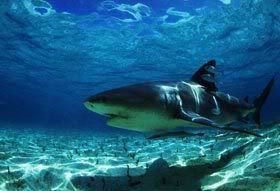
But, as The Washington Post article “Fish Story’s New Reality is that Man Bites Shark” explains, the truth is that in actuality, sharks kill an average of four people worldwide every year, while humans kill anywhere from 26 million to 73 million sharks annually.

“For most of human history, sharks have been seen as a threat to us. Only recently are we beginning to see we’re a threat to them,” said David Balton, the U.S. deputy assistant secretary for oceans and fisheries, in a recent interview, according to the article.

An international team of scientists came to this conclusion based on research that included the use of satellite tracking and DNA analysis. Among their findings, the fact that shark populations around the world have declined in great numbers during recent years.

For example, the article notes, in March, a team of Canadian and U.S. scientists calculated that "between 1970 and 2005, the number of scalloped hammerhead and tiger sharks may have declined by more than 97 percent along the East Coast, and that the population of bull, dusky and smooth hammerhead sharks dropped by more than 99 percent.”

The steep decline in shark population, according to the experts, is mostly due to shark hunting. This is because this predator’s fins are used to make what is called “shark-fin soup”, which is considered a delicacy in Asian countries and many other places around the world.

In this entry’s featured video, you will be able to see some of the atrocious methods that shark-hunters utilize to catch their prey. You can also observe a cruel practice called shark “finning”, which consists of slicing off a shark’s fins and tossing the animal back in the ocean to die.

If you’re interested in doing something to help with the efforts for shark conservation, you may consider actually adopting one of them. You can go to http://worldanimalfoundation.homestead.com/AdoptAShark.htmlvisit and adopt a shark from the World Animal Foundation.

You can also visit sharktrust.org, the Web site for Shark Trust, a marine charity established in the UK concerned with the plight of the shark on an international scale, and find out more about their adoption program. Of course, you may also contact any of the many other national and global organizations concerned with shark survival and do your part to help protect the sharks.

Treasure Coast builds eco-friendly children's museum


The Children's Museum of the Treasure Coast, currently under construction, will be the first green commercial building in Martin County.

The new museum, which is being built at IndianRiverSide Park in Jensen Beach, will feature water-conserving bathroom fixtures, insulated windows, showers for people who ride a bike to work, and "special windows and air-conditioning sensors that will reduce the building's energy use by 20 to 30 percent," according to the Palm Beach Post's article "Children's Museum also preserves the environment."

Environment conservation has been a priority for the museum since the very beginning. The article explains that when part of 40-year old building was demolished, workers recycled about 75 percent of the waste including drywall, studs, concrete, plastic piping, metal and steel.

The next step is the application to the United States Green Building Council so that the museum is officially recognized as a green building by obtaining LEED certification.

Monday, June 4, 2007

Human medications affecting Florida's sharks


Scientists recently discovered traces of human medications in the blood of some of Florida's sharks.

Various kinds of anti-depressants, cholesterol-lowering drugs and synthetic estrogens were among the prescription medications that were found in the bloodstream of young bull sharks from the Caloosahatchee River on Florida's southwest Coast.

According to the researchers, the substances made their way to the river due to the fact that it receives wastewater from several sewer plants. And although the water is treated and bacteria is removed, drugs are not, mainly because treatment systems are not designed to do so.

Scientists from the Mote Marine Laboratory, the private marine research laboratory responsible for the findings, believe that it is likely that the medications traveled to the river after being excreted by people taking them who then unknowingly flushed them down the toilet.

It is not known how the presence of human medications in the sharks' blood will affect them in the long run. Scientists are now tagging sharks with chemical-absorbing discs so they may be able to measure the amount of chemicals in their organism, as well as find out exactly what kind of effects these drugs will have on them over time.

Saturday, June 2, 2007

Bush addresses climate change crisis, proposes global goals

This week, President Bush publicly discussed the issue of global warming and for the first time, proposed a global effort to do something about it.

In a conference held in Washington, Bush spoke about his proposal to combat global warming by negotiating with the world's biggest polluters (among them China and India), through a series of meetings to be held in the fall.

According to today's New York Times article "Bush Proposes Goal to Reduce Greenhouse Gas," his "global strategy" to reduce global greenhouse gas emissions includes the idea of each participating country establishing "mid-term national targets for reducing emissions over the next 10 to 20 years, while working together to set a longer-term goal."
This announcement comes as a surprise to many, particularly because the current administration had always been reluctant to join the international debate on climate change.
But his statements, many critics say, are not convincing enough. Although he seems to have a change of heart in regards to this issue, they say, he did not make any commitments or offer any details as to how the U.S. ( the world's biggest source of emissions that contribute to global warming) would go about achieving these goals. For this reason, White House environmental adviser Jim Connaughton described his plans as mere "aspirational goals."
President Bush is also criticized because he seems to be ignoring other international efforts addressing this issue, among them the Kyoto Protocol, a United Nations agreement that commits countries to reduce their greenhouse gas emissions between 2008 and 2012 (and which the U.S. never ratified).
Others note the fact that his goal is to come up with the definitive strategy in 18 months. As The New York Times' editorial "Playing to the Crowd- Talk about Warming" points out, this would conveniently coincide with his departure as president, "suggesting his real goal is to leave the heavy lifting to his successor".

Tuesday, May 29, 2007

Giant Pandas fight for survival

The Giant Panda is one of the most beloved animals in the world. Its characteristic black patches of fur around the eyes, ears and body, as well as its love for bamboo sticks and apparently noble nature, have made it a favorite of zoo-visitors, animal lovers and the general public.

Unfortunately, this species faces an uncertain future as it continues being a target for poachers and its natural habitat continues shrinking. Another threat of great concern is the species' alarmingly low birthrate. Altogether, these factors have led to an increasing concern over its survival.

As of now, the Giant Panda is classified as an endangered species. According to the World Wildlife Fund (WWF), an international non-governmental organization that seeks to "stop the degradation of the planet's natural environment and to build a future in which humans live in harmony with nature", there are only 1,600 pandas living in the wild.

It is estimated that another 180 more live in captivity within China and around 20 others in other countries around the world.

In the National Zoo in Wahington, three of them live happily under the care of zoo staff as they are admired by visitors. Mei-Xiang, the female, Tian Tian, the male, and their first baby, 20-month-old Tai Shan, live in a reserve that mimics thir natural habitat as scientists learn about their behavior.

In this entry's video, you can take a look at how they interact with each together and also, obtain a better understanding of this zoo's efforts to help in the international campaign to save the panda.

By the way, you can help the Pandas too. Visit http://nationalzoo.si.edu/Forms/GPDonation/ for more information.

Monday, May 28, 2007

New York City's Yellow Cabs Turn Green


Instead of a sea of yellow cabs, the Big Apple will soon have a "green" taxi fleet.

New York City Mayor Michael Bloomberg announced today that little by little, the city's entire fleet of yellow cabs will be entirely replaced by fuel-efficient hybrid cars.

As of now, only 375 of the 13,000 cabs rolling through New York city's streets are hybrids. But with this measure, the number will rise to 1,000 in 2008, and grow by 20% every year. It is expected that by the year 2012, every single cab will be a hybrid, a type of vehicle that runs on a combination of gasoline and electrical power.

Of course, the cabs will keep their emblematic yellow color, but will emit less exhaust and reduce carbon emissions, and will thus be kinder to the environment.
The measure is part of Bloomberg's PlaNYC, a plan that seeks to achieve a 30 percent reduction in greenhouse gas emissions within the city by 2030.

Sunday, May 27, 2007

Boca Raton favors more green construction

The city of Boca Raton is joining many other cities around the nation as it encourages developers to increase the construction of green buildings.

This according to an article from The Palm Beach Post, "Boca mulling incentives for an eco-friendly building," which talks about Boca Raton's Deputy Mayor Susan Whelchel efforts to help the environment with the building of such structures.

In order for a building to be officially considered "green," it must fulfill the standards established under the LEED (Leadership in Energy and Environmental Design) Green Building Rating System. This system was designed by The US Green Building Council (USGBC), a national coalition of members from every sector of the construction industry that seeks to "promote buildings that are environmentally responsible, profitable and healthy places to live and work."

Among the techniques used to make a green building , such as the one shown, are:


  • The use of organic or milk-based paints.
  • The use of recycled materials.
  • The use of packed gravel for parking lots instead of concrete or asphalt.
  • The usage of materials manufactured near the building site so as to reduce the environmental impact of long-distance transportation.
  • The installation of insulated glass windows and solar panels.
  • The presence of wildflower or native plant gardens.

There are also many benefits attributed to green buildings, among them:


  • Higher employee productivity.
  • Improved health and increased sense of happiness among tenants.
  • Lower energy and water bills.
  • Less greenhouse gas emissions.
  • Less impact on the environment overall.

Friday, May 25, 2007

Yard-watering schedule reminder

South Florida is going through a critical water shortage emergency and one of the driest periods in its history, which has led to the enforcement of rigid, though necessary water restrictions.

Due to the drought, yard-watering can only be done one day a week. Why specifically yard-watering?, you may ask. Well, because according to the experts, since many people unnecessarily over-water their garden, the easiest way to save water is precisely, to cut back on the times we water our lawn.

And while our gardens and backyards may not look as pretty as we wished they did, we must take into account that we must do everything we can to help water conservation.
Remember:
We are experiencing one of the worst drought on record. Brown lawns are a small price to pay to have an adequate source of drinking water for our very large population.
-Carol Wehle, Executive Director.
With this in mind, here are the details on Phase III Water Restrictions for Broward and Eastern Palm Beach County.

  • Odd-numbered addresses: 4 to 8 a.m. on Saturdays.
  • Even-numbered addresses: 4 to 8 a.m. on Sundays. Watering by hand with one hose and an automatic shutoff nozzle: 5 to 7 p.m. the same day.
These same restrictions apply to car washing.

For more details and specific information for your area, visit South Florida's Water Management District's Web page or call the SFWMD Water Shortage Hotline at (800) 662-8876.

Thursday, May 24, 2007

Gas-saving tips for the good of the planet and... your wallet


There is no doubt that the use of gasoline is harmful to our planet. Scientists explain that this is due to the fact that gasoline releases carbon dioxide, a greenhouse gas that is linked to global climate change. To make matters worse, gasoline also emits other pollutants, among them carbon monoxide, nitrogen oxides, and unburned hydrocarbons, which all create air pollution.

Today, the NPR program "Talk of the Nation", had a segment in which Amy Mattinat, automotive expert for askpatty.com gave listeners some tips on how to save money at the pump by improving their mileage. By following her recommendations, we can definitely save a few dollars but most importantly, we can reduce the amount of gasoline we waste, therefore helping the environment, through these simple steps:

1. Slowing down.
One of the best things you can do to save gas is to go at the speed limit whenever possible.
Remember: for every 5 miles per hour (mph) that you go over 60 mph., you're paying the equivalent of an extra 20 cents per gallon!

2. Using cruise-control.
If you have the cruise-control feature in your car, use it! This will help improve your fuel mileage by helping you drive at a steady speed.

3. Don't drive like a maniac!
When you push on the gas pedal and accelerate, and when you suddenly slam on the brakes, you unnecessarily waste a lot of gas.

4. Avoiding excesive idling.
According to Patty, when your car's idling away, not only do you get zero miles per gallon, but you also burn more gas than if you restarted the engine. As if that weren't bad enough, idling also increases your car's toxic emissions, so stop!

5. Plan all your shopping and errands so you can make them all in one trip.
Patty explains that "several short stop and go errands can use twice as much fuel than a longer multipurpose trip covering the same distance".

These are just a few of the free and easy ways you can save some money at the pump and at the same time, help reduce air pollution. Visit Patty's website for more useful ideas.

Tuesday, May 22, 2007

DiCaprio brings global warming documentary to Cannes


This week, Leonardo DiCaprio is attending the Cannes Film Festival among other Hollywood stars, though not as an actor, but as a writer, producer and narrator of a climate change documentary.

"The 11th Hour," a film that discusses how humans have affected the climate and what can be done to remedy the damage, will be featured as a special screening at the festival.

Following the footsteps of Al Gore, who won an Academy Award last year for his documentary "An Inconvenient Truth," DiCaprio seeks to bring attention to the critical issue of global warming, although in a different way. According to the Associated Press, the film not only shows the impact of climate change but also provides advice from over 50 leading scientists, visionaries and leaders from around the world on how to heal our planet. Among them, Wade Davis, an Explorer-in-Residence at the National Geographic Society, who sends a clear message about humanity's ability to repair the harm done:

"All of these forces sweeping over the planet are the
forces created by human beings. And if human beings are the source of the
problem, we can be the foundation of the solution."


The 11th Hour will be shown in U.S. theaters towards the fall; however, you may visit www.the11thhourfilm.com to find out more about the film itself and also learn about the crisis our planet is currently facing due to the climate change. You can also sign up for the campaign "Lighten your Footprint," which provides information on how you and your community can take action and become part of the solution.