Showing posts with label endangered species. Show all posts

Sunday, January 18, 2009

Manatees die at alarming rate


Manatee deaths in South Florida baffling
By DAVID FLESHLER

Sun-Sentinel

Sunday, January 18, 2009

Six manatees were killed by watercraft in Palm Beach County in 2008, a figure that ties the county record and mystifies conservation officials who had put more police on the water to protect the endangered mammals.

The county's total falls well below the death toll elsewhere, such as that in state leader Lee County, which had 14 deaths. But it follows two years in which no manatees were killed in Palm Beach County and is only the third time the number has been that high.

...

No one knows how many manatees live in Florida, but aerial surveys generally count about 3,000.

Enormous resources have been devoted to protecting them, as scientists research red tide, police patrol for speeding boats and government agencies protect coastal habitats. Tripp said the 30-year protection effort preserves many of the environmental assets that originally drew people to Florida.

"When you protect manatees, you protect seagrass flats," Tripp said. "When you protect manatees, you protect water quality. When you protect manatees, you protect springs. When you protect manatees, you protect all of coastal Florida."


Read the rest of the story here.

Thursday, January 3, 2008

Boca Raton conservationist saves turtles in Costa Rica


Dr. Kirt Rusenko is something of a celebrity among marine life lovers, not only in Boca Raton but in South Florida. But now, his popularity, might extend all the way to Costa Rica, especially among sea turtles.

He's the leading marine conservationist and researcher at the Gumbo Limbo Nature Complex in Boca Raton, a marine life research center that also provides a home to many endangered sea turtles.

According to yesterday's Palm Beach Post article, Turtle wizard is guiding light in Costa Rica, Rusenko was recently invited to Playa Grande, Costa Rica, to address the country's sea turtle nesting decline. Playa Grande, a 3.5-mile white sand beach that lies on the country's North Pacific Coast, supports a major nesting colony of leatherback turtles, a species that is endangered worldwide.

Pressure from real/estate developers to build oceanview condominiums may jeopardize the survival of the leatherback turtle in that area. According to the article, as it is, the beach is already seeing fewer turtle nests. There were 13,000 female leatherbacks nesting on Playa Grande in 1989. In 2006, there were only 56., the article states.

Because of this, the Costa Rican government invited Dr. Rusenko to evaluate the present situation and develop ideas for the implementation of more protection laws to preserve this turtle species.

Dr. Rusenko is also working on improvements to the Gumbo Limbo Center to accomodate even more sea turtles. To read more about it, read the article by Palm Beach Post reporter Gretel Sarmiento here.

Thursday, August 9, 2007

Photo shows illegal hunting of gorillas continues

Just yesterday, I posted what could be described as a lovely picture of thriving gorillas who are cared for by a successful conservation program.

In contrast, the picture you see above, also from Reuters, is not a pretty one. It shows four dead mountain gorillas that were illegally killed in the Virunga National Park in the Democratic Republic of Congo during the week of July 26. The photo was released just yesterday, August 8, by the World Wildlife Fund (WWF).


I know the photo is perhaps too graphic, but it depicts reality and I thought it was important to put context in the situation that is affecting gorillas today. Yes, there are things being done to protect the species but the reality is that gorillas continue facing an uphill battle in order to survive.

The gorilla is one of the most endangered species in the world. According to the WWF, this is due to the fact that gorillas are confronted by the devastating consequences of increased habitat loss, poaching for the bushmeat trade and the spread of dangerous diseases like Ebola. And although the capture or killing of gorillas is illegal, it continues to take place, as the picture demonstrates.

Wednesday, July 4, 2007

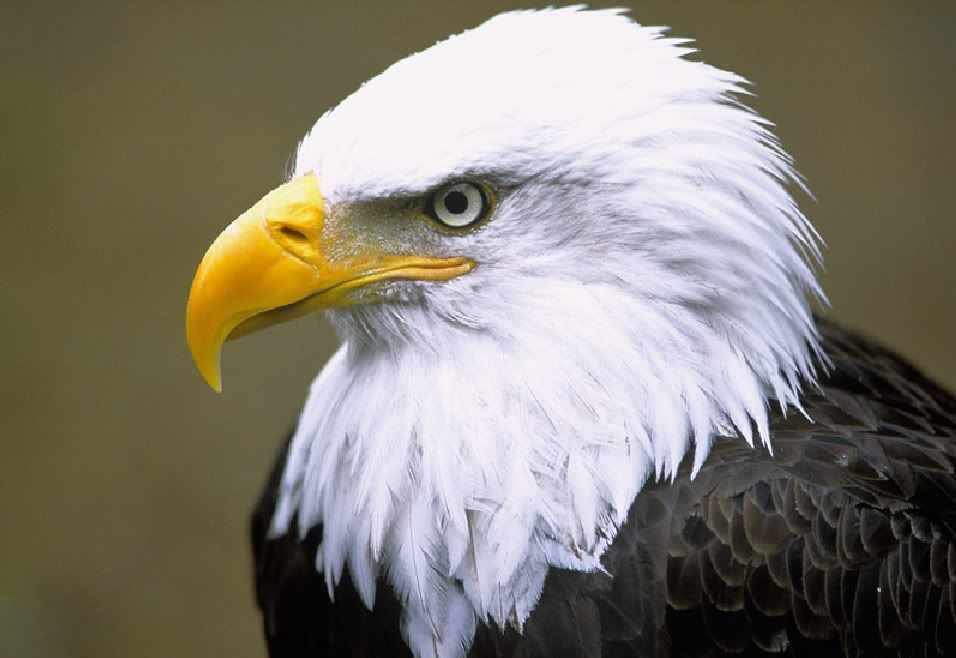
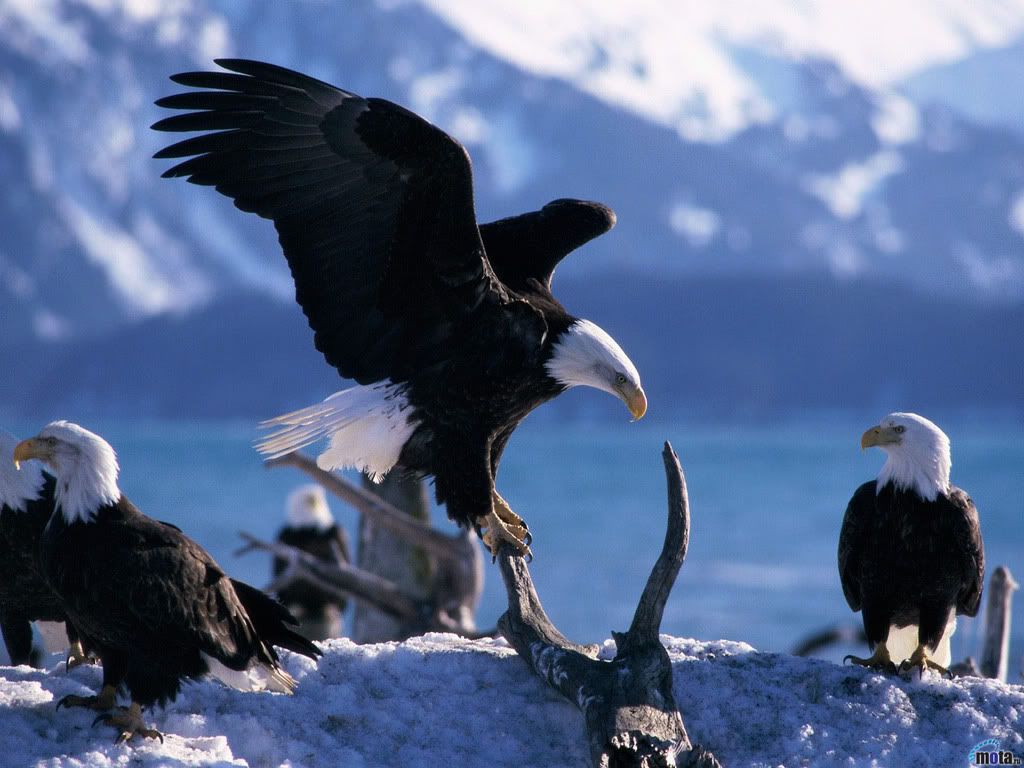
Bald eagle comeback on time for America's birthday


The news of the bald eagle’s recovery arrived just in time for Independence Day.

Today, America celebrates not only its birthday but also the victory of the eagle, its national symbol, over what many called its impending death sentence.

According to the American Eagle Foundation, the bald eagle was chosen as America’s National Emblem by our country’s Founding Fathers in 1782.

Initially, it did face some disapproval from certain individuals, including Benjamin Franklin, but with time, it became the most beloved bird in the country because of its qualities and symbolism.

In the words of President John F. Kennedy:
The Founding Fathers made an appropriate choice when they selected the bald
eagle as the emblem of the nation. The fierce beauty and proud independence of
this great bird aptly symbolizes the strength and freedom of America.

The image of this majestic animal is now found not only on the Great Seal of the United States but also on the dollar bills and coins we use, as well as on our passports and stamps, among many other places.

This is why, after being on the brink of extinction, the bald eagle’s comeback is great news to this nation, which so dearly loves its national bird.

Today’s edition of the Sun-Sentinel expressed the same through an editorial entitled “The bald eagle flies off the endangered species list, just in time for Independence Day.”

Moreover, it stressed the importance of conservation efforts, setting as an example the success story of the American bald eagle:

At a time when Florida still struggles to rescue manatees and panthers from the
threat of extinction, the 40-year commitment to preserve the bald eagle for
future generations of Americans offers fitting lessons on the value and
potential of conservation programs. If the resolve is there, the efforts can and
do work.

Thursday, June 28, 2007

Bald eagle soars off endangered list


After being on the verge of extinction in 1967, the American bald eagle has officially been taken off the endangered species list today.

“Today, I am proud to announce the eagle has returned,” Interior Secretary Kirk Kempthorne said while making the announcement at Jefferson Memorial.

According to the AP article “Bald Eagle comes off endangered list,” in 1963, there were only about 417 mating pairs of bald eagles in the contiguous 49 states.

The powerful and majestic-looking creature had been decimated by DDT, a pesticide that was used to control mosquitoes and other insects. DDT residue contaminated rivers and other waterways, contaminating the fish that bald eagles would later ingest which would then poison and inevitably cause their death.

It was also “hunted for its feathers, shot from airplanes, the subject of a 50-cent bounty in Alaska… and fed to hogs in some states,” according to another AP article-“U.S. bald eagle numbers make recovery.” Loss of habitat also contributed to the bald eagle’s near demise.
Congress passed the Bald Eagle Protection Act in 1940 to prohibit the killing, selling or possessing of the regal bird. It was also listed as endangered under the Endangered Species Act in 1967. But what the experts identify as the first and most important step in the eagle's path to recovery began when in 1972, the use of DDT was banned in the United States.

According to the US Fish and Wildlife Service (USFWS), there is now an estimated high of 9,879 breeding pairs, 1,133 of which are found in Florida.
  • To learn basic facts about the bald eagle (and even listen to some of the eagle's actual cries!), visit the American Eagle Foundation page.
  • To listen to an interview clip of National Bald Eagle Coordinator Jody Millar's discussion of "How bald eagles became endangered," click here.